







Intelivita

Augmented Reality App Development

Intelivita is an augmented reality app development company in London, UK. We build interactive AR experiences for iOS, Android and web platforms around your users, business goals and technical requirements.

Our AR development process covers consultation, UX/UI design, 3D modelling and animation, application development, deployment and ongoing support.

Trusted by leading organisations and growing UK businesses

oxitecMicrosoftAkzoNobelEPCENDO1000Local Linked
Strategy
UI/UX Design
Development
Testing
Launch
Support
Growth

How can augmented reality help your business?

Businesses use AR for product visualisation, training, virtual try-on, entertainment, property visualisation and interactive shopping experiences.
Augmented reality places interactive digital content within a user’s view of the real world, usually through a smartphone or tablet.
  1. Product Visualization

    Product visualisation

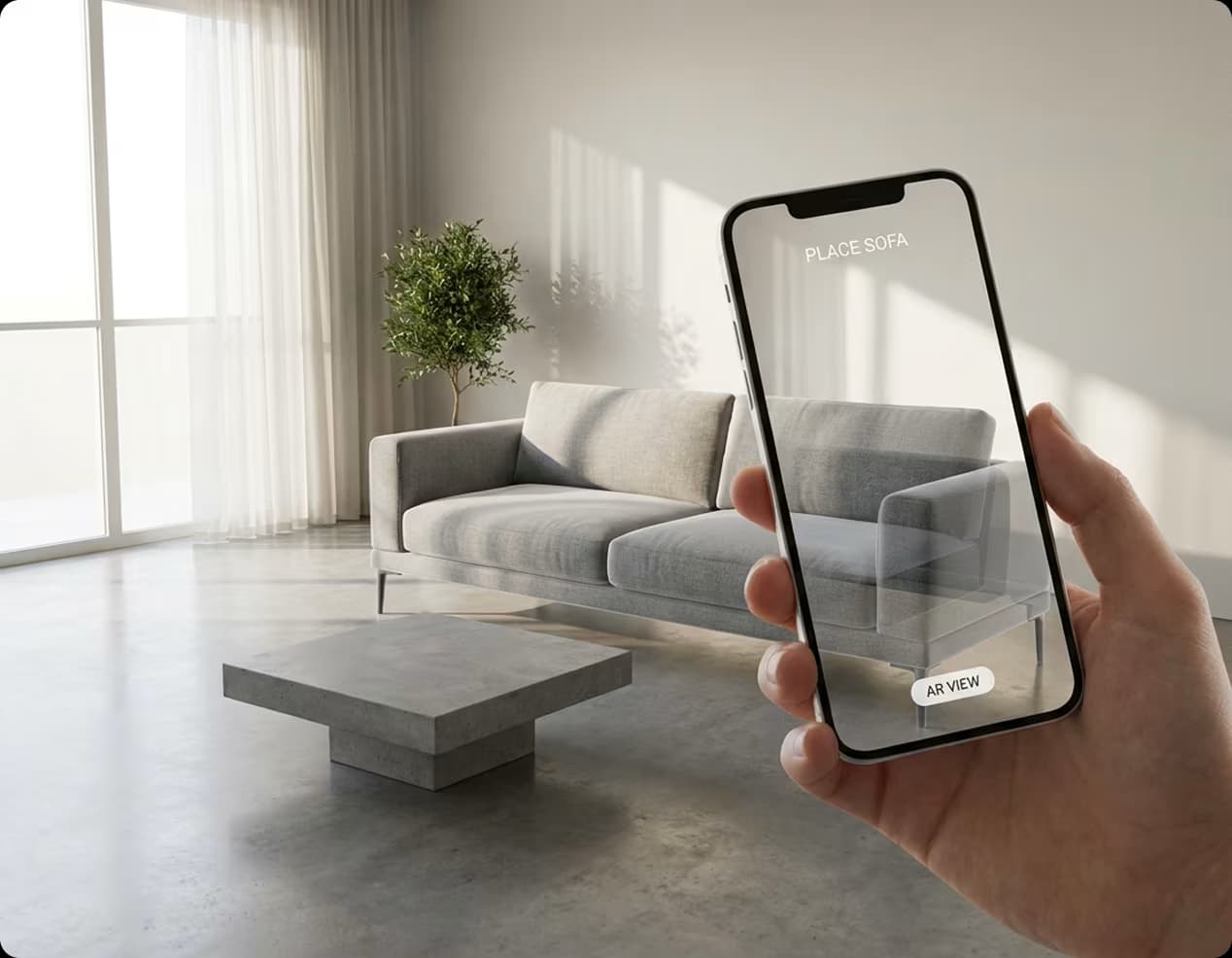
    Give your customers a better way to see your products before they buy. With AR product visualisation, they can place a 3D version of your product in their own space, view it from different angles and see it at its intended scale.

    For example, a furniture retailer can let customers place a virtual sofa in their living room to see how it looks and fits before ordering.

  2. Learning and Training

    Learning and Training

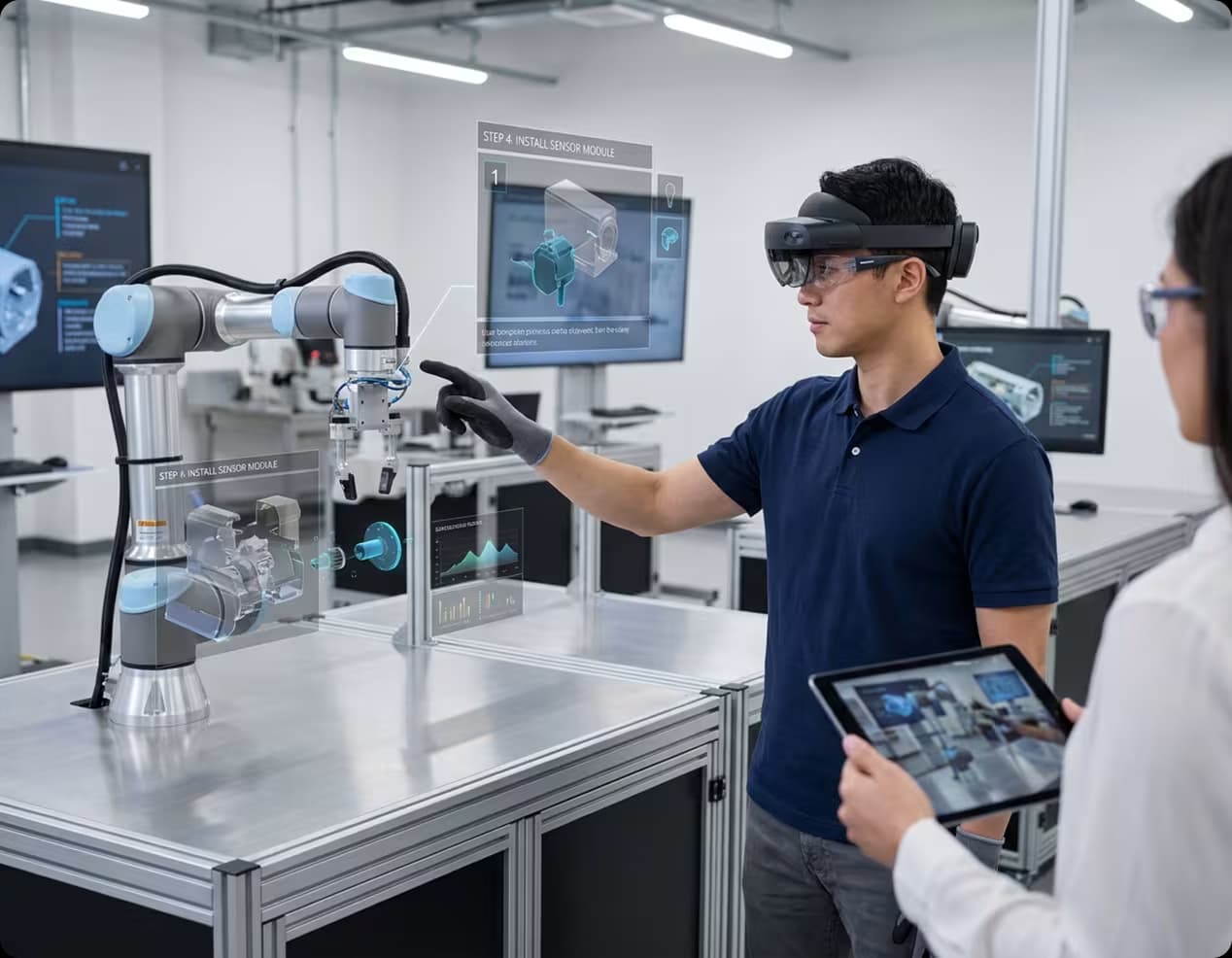
    Use AR to guide your customers or employees through a task while they complete it. Instructions can appear alongside the product, equipment or component they are working with.

    You could use AR to show someone how to assemble a product, operate equipment, carry out maintenance, identify components or diagnose a common problem step by step.

  3. Virtual Try-On

    Virtual Try-On

    Virtual try-on experiences allow customers to preview products on themselves in real time through a supported device.

    Depending on the product and technology, users can virtually try on glasses, makeup, clothing, jewellery and other accessories before purchasing them.

  4. Product Visualization

    AR Gaming and Entertainment

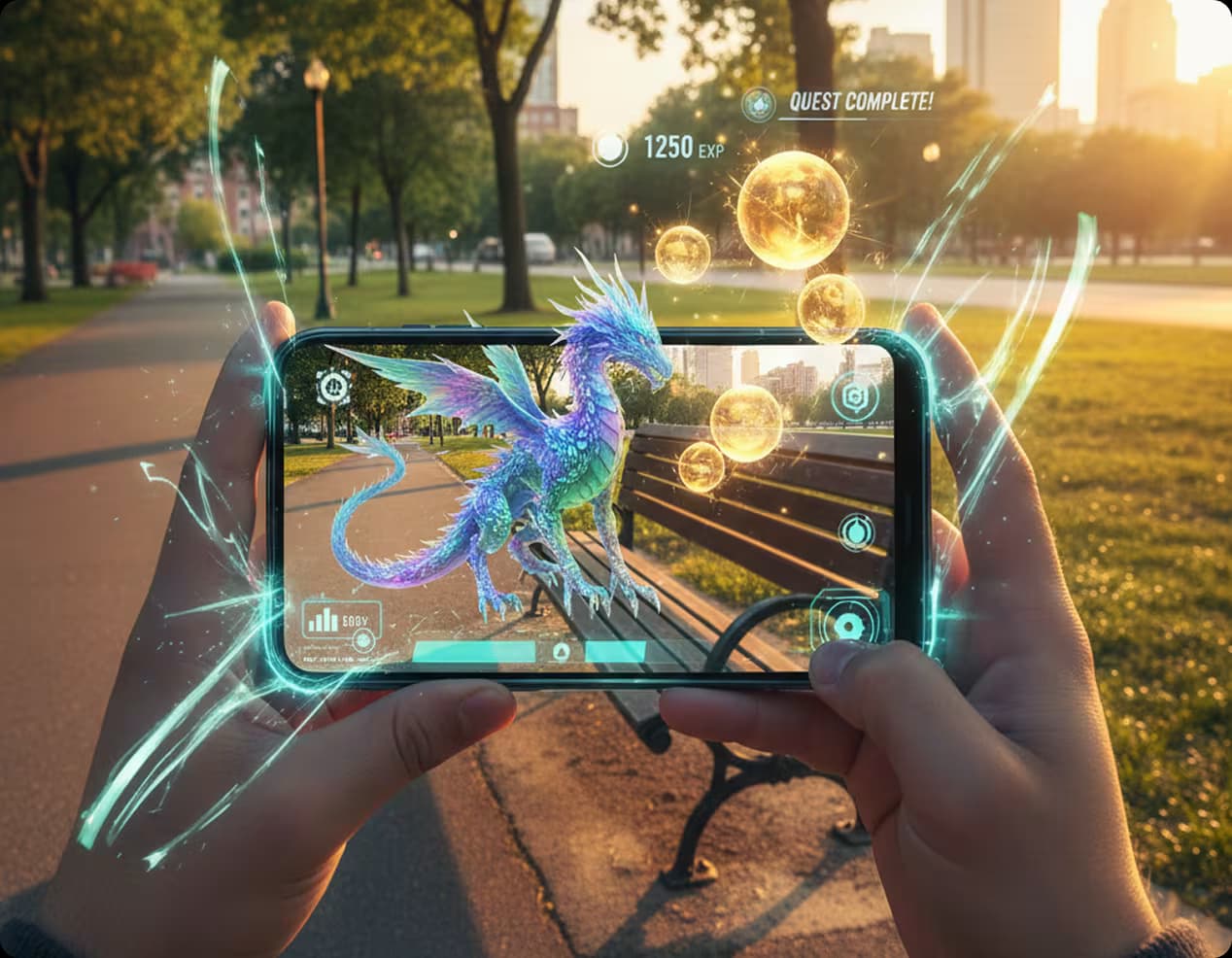
    AR turns the world around your users into part of the experience. AR Games can place digital characters, objects and challenges within real locations or indoor spaces.

    Pokémon GO is a familiar example of location-based AR, where physical locations become part of the gameplay.

  5. Architecture and Real Estate

    Architecture and Real Estate

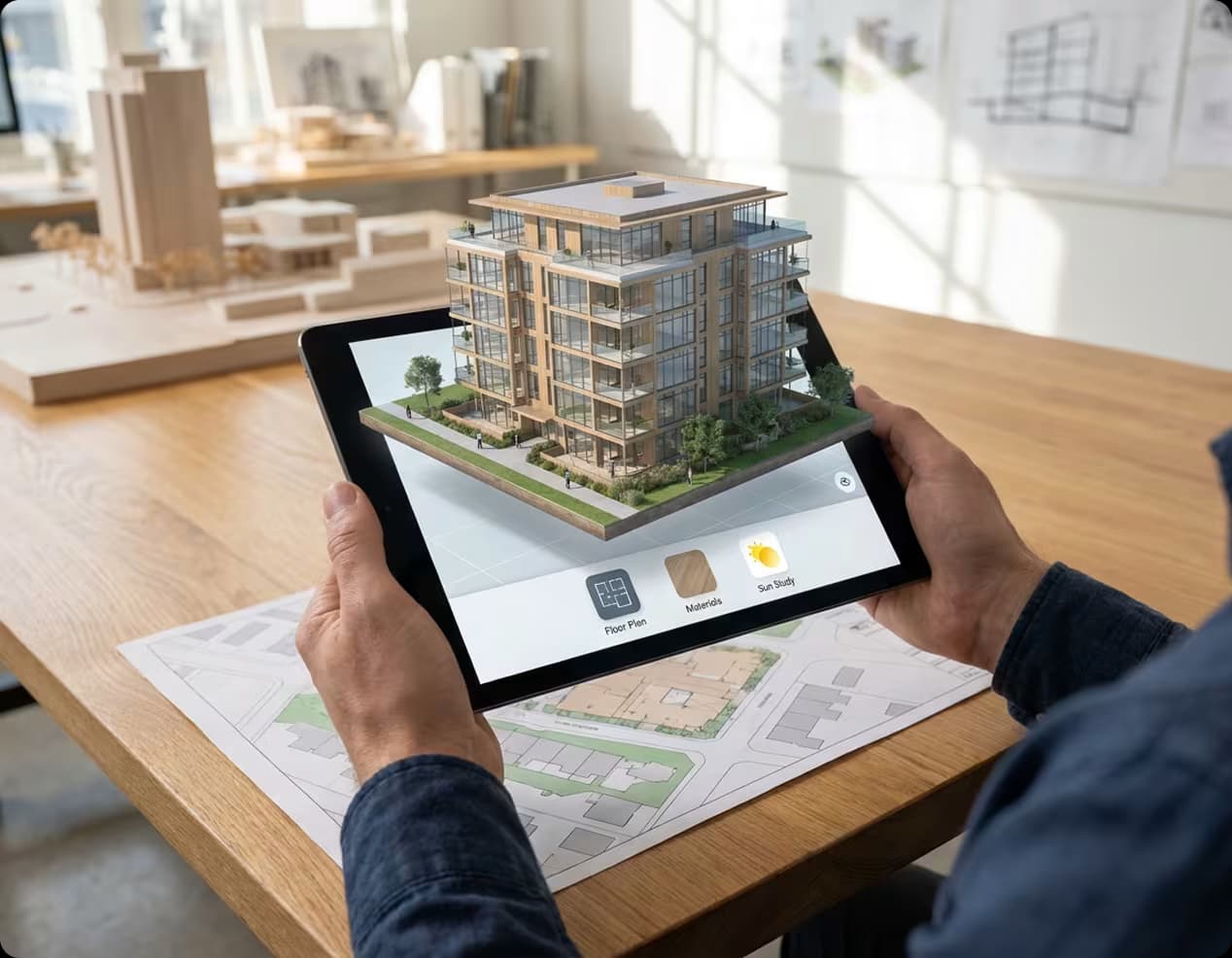
    Show clients a property or design before it exists in the real world. Prospective buyers can explore a development in 3D, view proposed interiors or see how planned changes would look within an existing property.

    Architects and developers can also use AR to communicate designs more clearly to clients and stakeholders.

  6. Interactive Shopping Experiences

    Interactive Shopping Experiences

    In a physical shop, AR can give customers useful information exactly where they need it. They can use their smartphone to view product details, prices, available options or interactive content linked to products, packaging and displays.

What augmented reality development services do we offer?

Intelivita provides AR development services from initial consultation and prototyping through development, deployment and ongoing support.

AR Consultation and Prototyping

TECHNICAL FEASIBILITY • AR PROTOTYPING • PROOF OF CONCEPT

We assess your idea, business goals, target users and technical requirements to determine whether AR is right for your product.

Where needed, we create a prototype or proof of concept to test the proposed experience and technical approach before full development.

Custom AR App Development

AR FUNCTIONALITY • APPLICATION LOGIC • BACKEND & APIS

We design and develop custom augmented reality applications around your requirements.

This includes the user interface, AR functionality, application logic, backend systems, APIs and other features needed to deliver your product across the agreed platforms.

AR Integration With Existing Applications

AR FEATURE INTEGRATION • API INTEGRATION • BUSINESS SYSTEMS

You don't always need to build a new application to introduce AR. We can add AR features to your existing product and connect them with your current application, APIs, databases, product catalogue or other business systems.

3D Content Creation and Optimisation

3D MODELLING • 3D ANIMATION • REAL-TIME OPTIMISATION

AR applications often need 3D models, materials, textures and animations. Our 3D team creates and optimises these assets for real-time use while balancing visual quality and performance across supported devices.

AR Support and Maintenance

BUG FIXES • DEVICE COMPATIBILITY • FRAMEWORK UPDATES

After launch, we support and maintain your AR application as operating systems, devices and AR technologies change.

This includes fixing bugs, resolving compatibility issues and keeping the application working across supported operating systems, devices and AR technologies.

Ready to Bring Your AR Idea to Life?

Tell us about your AR idea, target users and the experience you want to create. We’ll review your requirements and recommend a practical approach, technology, scope, timeline and estimated cost.

What types of AR experiences can we build?

Different AR technologies work in different ways. The right approach depends on how your application needs to understand its surroundings, recognise objects or locations and place digital content within the real world.
  • Marker-Based AR

    Marker-based AR recognises a predefined visual marker, such as a QR code, illustration, product label or another distinct image. When the application detects the marker, it displays digital content linked to it.

    For example, scanning a character in an interactive storybook could bring the character to life as an animated 3D model. Users could then rotate, resize or interact with the character.

  • Markerless AR & Surface Tracking

    Markerless AR works without a predefined visual marker. It uses environmental tracking technologies, including simultaneous localisation and mapping (SLAM), to understand the surrounding space and identify suitable surfaces.

    This allows users to place digital objects within their environment. For example, someone planning a room could position a virtual chair in the available space, view it from different angles and arrange other furniture around it.

  • Location-Based AR

    Location-based AR uses GPS coordinates, device orientation and geospatial positioning to connect digital experiences with specific real-world locations.

    A virtual collectible could appear at a particular location, requiring users to visit that place before they can discover and interact with it. Location-based AR works well for games, tourism, navigation, events and other location-based experiences.

  • Object Recognition

    Object recognition allows an AR application to identify supported real-world objects and show relevant digital content alongside them.

    Your application could recognise a piece of machinery or a specific component and show operating information, maintenance instructions or an interactive guide while the user is working with it.

What is our AR app development process?

Our six-step process covers planning, UX/UI and 3D design, development, testing, deployment and ongoing support.
Building an AR app involves more than standard application development. We need to consider how the app understands its surroundings, how 3D content behaves in the real world and how the experience performs across different devices.
01

Requirement Analysis and Project Planning

We start by understanding your business goals, target users, required features and platforms. We then define the project scope and select the AR approach, such as marker-based AR, markerless tracking, object recognition or location-based AR.

We also define the technology stack based on your requirements, using Unity, Flutter with AR integration, native AR frameworks or suitable web-based AR technology.
02

UX/UI Design and Wireframing

We design the user journey, screen layouts, navigation and interactions around the AR experience.

Wireframes and interactive prototypes show how your users will access AR features and interact with digital content before development begins. We design the interface around your brand and the agreed platforms and devices.
03

3D Content Creation

Our 3D designers create the models, textures, materials and animations required for your AR experience.

We turn product information, illustrations or creative concepts into 3D assets using tools such as Blender, Autodesk Maya and 3ds Max. We optimise each asset for real-time use based on model complexity, textures, animation and device performance.

UX/UI design and 3D production run alongside each other once the creative direction and technical requirements are agreed.
04

AR App Development

Our developers build the application and implement its AR functionality, user interface, application logic, backend services, APIs and required integrations.

We develop the application using the technology selected during planning, such as Unity, Flutter with AR integration, native AR frameworks or web-based AR technology.

For shared technologies such as Unity, we configure, test and optimise the application separately for each target platform.
05

Testing and Optimisation

We test your AR application on physical devices and in the real-world environments where users will interact with it.

Testing covers tracking stability, surface detection, object placement, scale, lighting, animation, 3D rendering, usability and compatibility across the agreed devices and operating systems. We also optimise 3D assets and application performance for supported devices.
06

Deployment and Ongoing Support

We prepare your AR application for release and deploy it to the Apple App Store, Google Play or the agreed web environment.

After launch, we provide maintenance and updates for supported devices, operating-system versions and AR framework changes.

Is AR right for your product?

AR is a good fit when it solves a problem or improves an experience that relies on the user’s physical environment, location or interaction with real-world objects.

AR is worth considering when your users need to:

  • Visualise products within their physical environment before purchasing.
  • Try products virtually and compare different options.
  • Explore complex products, components or information in 3D.
  • Learn how to assemble, operate or maintain physical products.
  • Receive guidance connected to a particular object, environment or location.
  • Interact with digital content placed within the real world.

You may not need AR when:

  • The required information can be communicated just as effectively through images, video or a conventional application interface.
  • The experience does not depend on the user's physical environment, location or interaction with real-world objects.
  • AR would add novelty but would not provide a meaningful improvement for the user.
  • The likely customer or business benefit does not justify the additional production and maintenance requirements.

Not sure whether AR fits your idea? Discuss it with our AR team.

We review your use case, target users and business goals before recommending AR. If another approach fits your requirements better, we’ll tell you and recommend it.

DISCUSS YOUR USE CASE

Industries we serve with augmented reality solutions

We develop AR applications for industries that use product visualisation, interactive training, real-time guidance, location-based content, and other augmented reality capabilities.

Ecommerce & Retail

Product visualisation, Virtual try-on, Interactive shopping, 3D product experiences

Education & Training

Interactive learning, 3D models, AR simulations, Practical training

Real Estate

Property visualisation, 3D interiors, Interactive presentations, AR navigation

Healthcare

Medical training, 3D visualisation, Contextual guidance, AR simulations

Marketing & Advertising

Interactive campaigns, Product experiences, Branded AR, Location-based content

Travel & Tourism

AR navigation, Interactive city guides, Landmark information, Location-based experiences

Gaming & Entertainment

AR games, Location-based gaming, Interactive entertainment, Digital characters

Manufacturing & Industrial

Employee training, Assembly guidance, Maintenance support, Equipment information

How much do AR apps cost and how long do they take to develop?

AR app development with Intelivita starts from £12,000 and takes 3–8 months. AR features, 3D content, platform support, integrations, and technical complexity determine the final cost and development timeline.

AR Product Visualisation App

  • Up to 5 products
  • 3D product placement
  • Move, rotate and resize
  • Interactive product information

Estimated cost

£10,000

Estimated timeline

6–8 weeks

Why choose Intelivita for AR app development?

Intelivita brings AR development, 2D and 3D design, testing and deployment together within one team, with experience building AR applications since 2017.

AR Development Experience Since 2017

Intelivita was established in 2013, and we have been creating AR experiences since 2017, when modern mobile AR technology began moving into the mainstream.

Unity Expertise Since 2014

Our developers have worked with Unity since 2014 and use it alongside AR Foundation, ARKit and ARCore for AR development across supported iOS and Android devices

In-House 2D and 3D Team

Our designers and 3D artists handle concept artwork, illustration, modelling, texturing, rigging and animation, working directly with our AR developers throughout the project.

AR Development Under One Team

Your project stays with one team from consultation and UX/UI design through 3D production, AR development, testing, deployment and ongoing support.

Source Code and Asset Ownership

You receive project-repository access from the beginning of development. The bespoke source code, designs and 3D assets created for your project belong to you, subject to the agreed payment terms. Third-party technologies and licensed assets remain subject to their respective licence terms.

AR development technologies & integrations

We select the AR technology stack around your application, target platforms and required features. Our team works with AR frameworks, 3D tools, tracking technologies, backend systems and cloud platforms to build the complete application.

AR Development

Frameworks and technologies for building native, cross-platform and web-based AR experiences.

  • Unity
  • AR Foundation
  • ARKit
  • ARCore
  • Flutter
  • WebAR

3D Modelling and Animation

Tools for creating and optimising 3D models, textures, materials and animations for real-time AR experiences.

  • Blender
  • Autodesk Maya
  • 3ds Max
  • Adobe Substance 3D

AR Tracking and Interaction

Support different ways of recognising real-world environments and positioning interactive digital content within them.

  • Image Tracking
  • Surface Detection
  • SLAM
  • Object Recognition
  • Geospatial AR

Backend and APIs

Connect AR applications with databases, product catalogues, user accounts and existing business systems.

  • REST APIs
  • Node.js
  • .NET
  • Python
  • PostgreSQL

Cloud and Content Delivery

Cloud technologies for application data, backend services and the delivery of 3D content and other digital assets.

  • AWS
  • Microsoft Azure
  • CDN
  • Firebase
  • Cloud Storage

Analytics and Monitoring

Track application usage, crashes and performance to identify issues and support ongoing improvements.

  • Firebase Analytics
  • GA4
  • Crashlytics

What clients say about Intelivita

“What stood out most about Intelivita was their ability to operate as a true delivery partner rather than just a development vendor. They combined strategic input with hands-on execution, helping shape the product while also building it.”

Verified Clutch review

Frankie Cieslik

Frankie Cieslik

Director, CTO, LocalLinked Ltd

“Intelivita has developed an app that can dynamically display research questions and support a participant through all stages of their research journey.”

Verified Clutch review

Jordan Doust

Jordan Doust

Data Manager, University of Edinburgh

“What stood out most about Intelivita was the balance between professionalism and personal approach, which made the entire development process both efficient and enjoyable.”

Verified Clutch review

Nicholas Boundy

Nicholas Boundy

Executive, FabQuote

Frequently asked questions

How does augmented reality work?

Augmented reality places digital content within a user’s view of the real world through a supported device. AR uses cameras, sensors, surface tracking, image recognition and location data to understand the user’s surroundings and position 3D models, animations, instructions and other digital content within them.

Does my business need a native AR app or WebAR?

What is WebAR?

WebAR delivers an augmented reality experience directly through a supported mobile browser. Users can access it through a link or QR code without downloading an app.

It works well for marketing campaigns, packaging, exhibitions and shorter experiences. A dedicated mobile app may provide better performance and more advanced functionality.

Can you create the 3D models and assets for our AR app?

Yes. We can create the 3D models, materials, textures and animations required for your AR application. We can work from CAD files, drawings, photographs, illustrations, existing 3D files or an initial creative brief. If no reference materials are available, we can also develop the concept art and visual direction before producing the final 3D assets.

Is AR app development expensive?

Not necessarily. The cost depends on the experience and the amount of development and 3D work required. The more 3D models, animations, interactions and visual variations your application contains, the greater the production effort and cost. We review these requirements before providing an agreed scope, fixed cost and estimated timeline.

Turn your product idea into a clear plan

Tell us about your idea, existing product or next phase. We’ll review your goals, users and essential features, then outline a practical scope, delivery approach, timeline and expected cost with no obligation to proceed.

Augmented Reality (AR) App Development Company