Do You Need a Website for Your Business in 2026?

Co-Founder
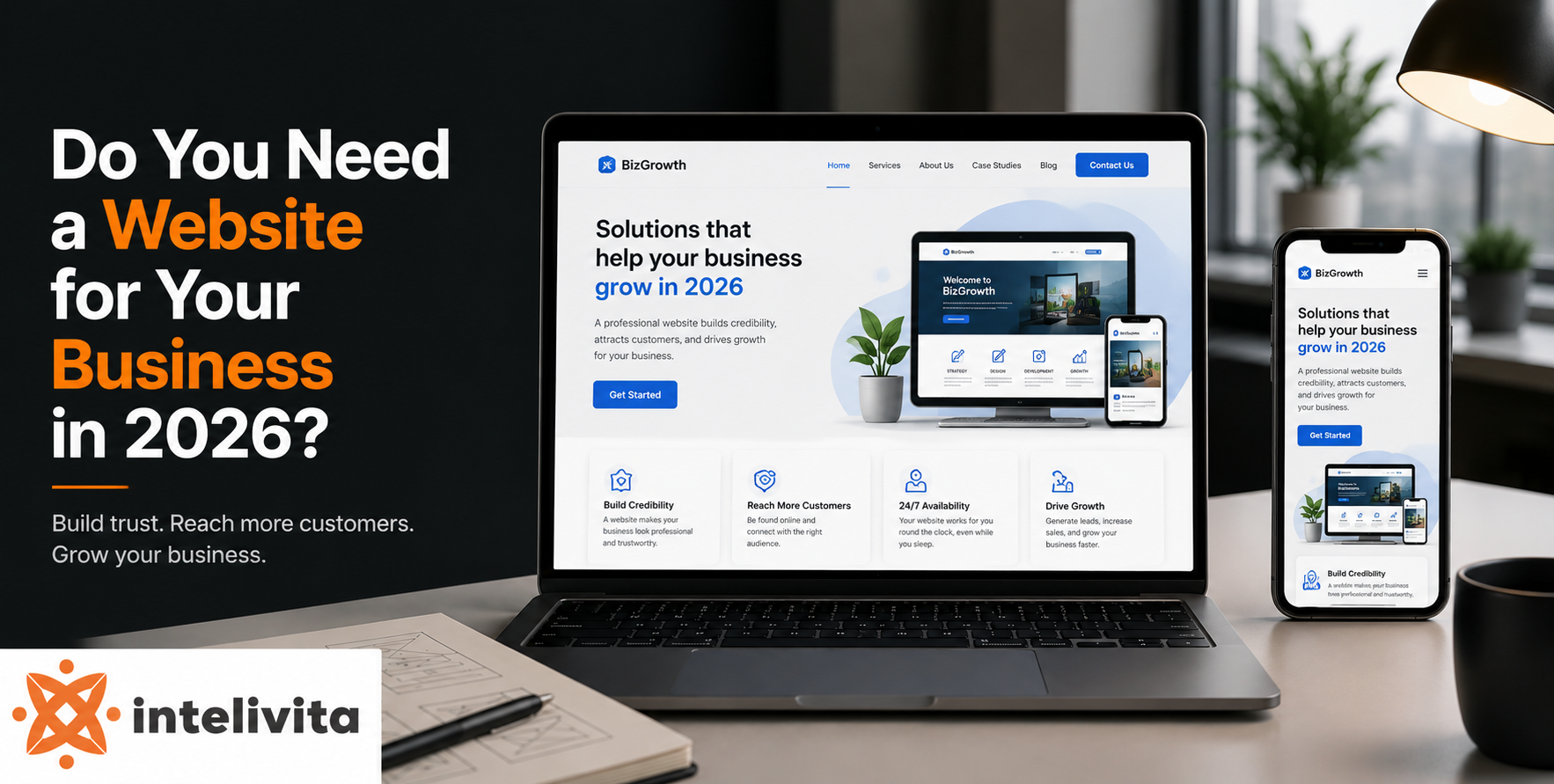
You need a website for your business in 2026 because social media sites and online marketplaces do not replace an owned digital asset that gives UK businesses full control over visibility, credibility, and customer acquisition.
A self-hosted website builds domain authority, drives organic lead generation through SEO, and establishes the trust signals that convert visitors into paying customers, fuelling sustainable business growth. A website remains the central hub that gives businesses complete control over branding, conversion pathways, and online presence, unlike rented third-party platforms subject to algorithm shifts and account restrictions.
What Are the Core Benefits of Having an Online Presence?
The core benefits of having an online presence are listed below.
- Global Audience Reach: Businesses connect with potential customers in different time zones through a website or social media profile accessible all day.
- Brand Credibility: A visible digital presence builds customer trust and strengthens brand reputation, influencing purchase decisions.
- Cost-Effective Marketing: Digital advertising delivers broader audience reach at lower costs compared to traditional marketing channels.
- 24/7 Accessibility: Customers browse products, check pricing, and complete transactions at any hour without relying on physical store hours.
- Customer Engagement: Direct communication channels allow businesses to collect feedback and respond to enquiries in real time.
- Search Engine Visibility: SEO-optimised websites surface on search engine results pages when users query relevant keywords, driving high-intent traffic.
- Thought Leadership: Publishing content positions a business as a subject-matter authority within its sector.
Why Aren’t Social Media Platforms Enough for a Business?
Social media platforms are not enough for a business because accounts on third-party platforms face algorithm changes, restricted reach, and sudden suspension with no right of appeal. A fully owned digital asset with complete visibility, custom branding, and social profiles ranks poorly on Google and offers zero equity, unlike a business website.
Instagram serves best as top-of-funnel discovery channels that direct traffic toward a website, which remains the central hub for products, services, and contact details, making it important to understand how social media fits within a broader strategy.
How Does a Website Build Trust and Brand Credibility?
A website builds trust and brand credibility through UI design, verified trust signals, and consistent branding that third-party platforms cannot replicate. Clean layout, fast load speed, and intuitive navigation establish a strong first impression, while SSL certification, transparent privacy policies, and clear contact details reduce conversion friction.
Testimonials, reviews, case studies, and industry certifications (ISO 27001) boost authority and give prospects the social proof needed to convert. Consistent brand colours, typography, and tone in all web pages solidify a recognisable business identity that builds long-term customer confidence.
Can Your Business Survive Without a Website?
Yes, a business can survive without a website, but without an owned digital asset, it loses direct access to organic search traffic, which drives 53% of all online discovery. Brick-and-mortar reliance and word-of-mouth referrals alone do not scale customer acquisition the way an SEO-optimised web presence can.
Competitors with established domain authority, service pages, and conversion pathways outrank and outperform a business operating solely on rented third-party platforms.
What Key Features Should Every Business Website Have?
The key features every business website should have are listed below.
- Responsive Design: The website adapts in desktop, tablet, and mobile viewports to maintain usability and search ranking.
- SSL Certificate: An HTTPS-secured connection protects user data and signals trustworthiness to visitors and search engines.
- Clear Navigation: A menu allows visitors to locate service pages, contact details, and business information without friction.
- Call-to-Action (CTA): Placed CTAs guide visitors toward conversions (enquiries, bookings, or purchases).
- Contact Information: Visible phone numbers, email addresses, and location details reduce drop-off and build customer confidence.
- Page Load Speed: Fast-loading pages reduce bounce rate and satisfy Google's Core Web Vitals ranking criteria.
- SEO-Optimised Content: Keyword-targeted copy and metadata improve organic search visibility and drive qualified traffic.
- Trust Signals: Testimonials, certifications, and case studies displayed on-site reduce purchase hesitation and reinforce brand credibility.
- Analytics Integration: Tools (Google Analytics) track user behaviour, traffic sources, and conversion data to inform ongoing optimisation.
How Much Does a Business Website Cost in 2026?
A business website cost in 2026 ranges from £1,000 to £50,000, with pricing shifting based on project scope, feature count, and complexity. DIY builders and freelancers sit at the lower end (£500-£5,000), while professional agencies handling custom UI, CMS integration, SEO foundations, and API integrations charge £3,000-£50,000.
Domain registration adds £1-£20 per year, hosting runs £5-£800 per month depending on server tier, and ongoing cost of web development factors like maintenance cost £99-£399 monthly based on plugin count, security monitoring, and content update frequency.
How Do You Build a Website for Your Business?
To build a website for your business, follow the nine steps listed below.
- Define Goals and Site Structure. Identify the website's purpose, target audience, and core pages such as Home, About, Services, and Contact.
- Choose a Domain Name. Register a brandable, keyword-relevant domain through registrars (GoDaddy or Namecheap).
- Select a Hosting Provider. Purchase a hosting plan from providers (SiteGround or Bluehost) that supports uptime guarantees and SSL certification.
- Pick a CMS or Website Builder. Install WordPress or use Webflow to manage site structure, content, and design templates.
- Design the Website Layout. Apply a responsive UI with clear navigation, CTA placement, and mobile-optimised viewports.
- Develop and Publish Core Pages. Build essential pages with SEO-optimised copy, trust signals, and structured contact information.
- Install an SSL Certificate. Activate HTTPS encryption through the hosting provider's control panel to secure user data.
- Optimise for SEO and Core Web Vitals. Configure metadata, image compression, and page load speed to meet Google's technical SEO benchmarks.
- Launch and Connect Analytics. Deploy the live site and integrate Google Analytics and Google Search Console to monitor traffic and indexation in web development.
What Is the Average Conversion Rate for a Small Business Website?
The average conversion rate for a small business website is 2%-5%, with top-performing sites reaching 10%-11% depending on industry, traffic source, and conversion goal.
Conversion rate is calculated by dividing the number of conversions by total visitors, then multiplying by 100:
Conversion Rate (%) = (Conversions ÷ Total Visitors) × 100
Rates differ in different industries. E-commerce averages 1%-3% while B2B lead generation pages reach 2%-5%, and vary by traffic source, as organic search visitors convert at higher rates than cold social media traffic, with desktop sessions outconverting mobile due to friction in checkout and form completion flows.
Is a 12% Website Conversion Rate Good?
Yes, a 12% website conversion rate is good, placing a business well above the industry average of 2%-5% and within the top-performing tier where only the most optimised sites with strong UX, targeted traffic, and high-intent landing pages consistently operate.
Achieving the 12% rate signals effective CRO strategy, well-matched traffic sources, and frictionless conversion pathways across device types.
How Does a Website Help Your Business Get Found on Google?
A website gets found on Google through crawling, indexing, and ranking, where Googlebot follows internal links and sitemaps to discover pages and stores them in Google's index.
Google ranks them against keyword-targeted queries based on E-E-A-T signals and technical SEO factors (site structure and Core Web Vitals). Businesses in London investing in SEO services accelerate domain authority growth and organic visibility in high-intent search queries.
How Can a Website Generate Leads and Sales for Your Business?
A website generates leads and sales by converting organic search traffic into outcomes through placed CTAs, lead capture forms, and landing pages.
Product and service pages with clear pricing, contact details, and persuasive copy directly support bottom-of-funnel conversions. Integrating CRM tools and live chat captures and nurtures more leads that otherwise exit without engaging.